

The Revelation of Creation
“The heavens declare the glory of God, and the sky above proclaims his handiwork. Day to day pours out speech, and night to night reveals knowledge. There is no speech, nor are there words, whose voice is not heard. Their voice goes out through all the earth, and their words to the end of the world. In them he has set a tent for the sun, which comes out like a bridegroom leaving his chamber, and, like a strong man, runs its course with joy. Its rising is from the end of the heavens, and its circuit to the end of them, and there is nothing hidden from its heat.”
Psalm 19:1-6 ESV
C.S. Lewis wrote that Psalm 19 is “the greatest poem in the Psalter and one of the greatest lyrics in the world” (1).
In Theology, there is a distinction between General Revelation and Special Revelation. In general revelation, God reveals Himself through His creation; in special revelation, God reveals Himself through the inspired Word. The two revelations of God require a response from us, the creature. In other words, we are to look up to the sky, look down to the Word and then look at ourselves. When studying Psalm 19, it will be helpful to keep in mind what the Apostle Paul wrote to the Christians in Rome:
For the wrath of God is revealed from heaven against all ungodliness and unrighteousness of men, who by their unrighteousness suppress the truth. For what can be known about God is plain to them, because God has shown it to them. For his invisible attributes, namely, his eternal power and divine nature, have been clearly perceived, ever since the creation of the world, in the things that have been made. So they are without excuse. For although they knew God, they did not honor him as God or give thanks to him, but they became futile in their thinking, and their foolish hearts were darkened. Claiming to be wise, they became fools, and exchanged the glory of the immortal God for images resembling mortal man and birds and animals and creeping things.”
Paul reminds the Christians in Rome of those who fail to recognise God as the creator and refuse to thank Him or submit to Him. Of course, the same is true today. When a person denies the existence of God, it is not because of a lack of evidence, as we shall see. The Bible declares it to be a moral issue. It provides a devastating diagnosis of the human condition, describing humanity as being by nature, “dead in trespasses and sins,” and “who by their unrighteousness suppress the truth.” (see Eph 2:1, Rom 1:18). As R.C. Sproul writes, “Human beings are adept at rejecting objective evidence when it does not confirm their prejudice, no matter how clear or compelling the evidence may be. All the proof in the world will not persuade some people because they are not truly open to the evidence. My experience as an apologist and a minister has shown me that the real reason most people reject Christianity is not for lack of evidence. The proof from external sources regarding the truth of the biblical account is too overwhelming. No, the real issue is a moral one.” (2). This is the real reason people deny God’s existence, not because science has disproven God, for science cannot make such a claim.

A revelation is the making plain of something previously hidden, and although we cannot see God, He reveals Himself to us. The diagnosis is that sin has wrought in us a spiritual darkness (see Col 1:13, 2 Cor 4:3-4). Augustine, the great church father, illustrated this by saying that even those with perfect vision if placed in a room full of beautiful objects, could not see them if the room was engulfed with darkness. Similarly, Augustine said the light of divine revelation is necessary for us to know any truth. The light of general revelation is available to every human being. Creation itself is like a grand theatre full of beautiful objects in which God plays the leading role. The problem is the darkness of our hearts.
Nevertheless, the light of general revelation is so forceful that every human knows God exists. If a person claims to be an atheist, they deny something that is known to be true. That is why the Bible calls the atheist a fool (see Ps 14:1). When the Bible describes a person as a fool, it does not refer to intellectual capacity. It is declaring a moral judgment. The fear of God is the beginning of wisdom, so the denial of God is the height of foolishness. Likewise, a person who describes themselves as an agnostic also denies general revelation. It may not be in quite the same way, as the agnostic sits on the fence and says there is insufficient evidence to conclude the existence or non-existence of God. However, the reality is that agnosticism is the other side of the same coin and is ultimately a rejection of general revelation and God.
David, the author of the Psalm, defines general revelation by using the metaphor of “pouring out speech” (19:2). The idea is of an inexhaustible spring of water. The general revelation of God in the things that are made continually declares the glory of God second by second, day and night. Creation pours out the evidence for the creator. David uses a paradox: “There is no speech, nor are there words, whose voice is not heard. Their voice goes out through all the earth, and their words to the end of the world.” (19:3-4a). This paradox is designed to make us think. David is saying that creation speaks, not audibly, but there is a voice that transcends culture, tongue and place. It doesn’t matter where on earth you may be; creation speaks to every creature and testifies to the glory of God. A mountain, the stars, the beach and the ocean, humanity, animal and plant life. All of these things testify to a divine mind behind them.
This is true concerning the sun, which plays a central role in the general revelation of Psalm 19. David uses two metaphors, “like a bridegroom leaving his chamber” and “like a strong man running his course with joy.” (19:5). From the perspective of Psalm 19, the sun is God’s Jewel in the Crown. Culturally, the bridegroom is brought out of his house by his friends to meet his bride. You can imagine the joy as the bridegroom emerges from his chamber. That is the picture David wants us to grasp. The other picture is of a strong man running—picture Usain Bolt, who holds the world record for the 100-metre sprint. Picture him on the starting blocks and the power generated as the whistle blows. He begins to run with joy as he wins the race. Similarly, the sun emerges from its tent, which was once dark is illuminated with bright light and heat as it runs its course with joy. Nothing can escape the sun; the whole world sees its rising and benefits from its life-sustaining properties.

As society suppresses the truth of God’s creation, the result is moral collapse. If men and women do not believe there is a God to whom they are accountable, then there is no reason to believe that man was created for a particular purpose and to live in a certain way. The result is foolishness, a darkening of understanding, and the disintegration of a culture. This is what we are seeing in our culture today as Paul goes on to tell the Christians in Rome:
“Therefore God gave them up in the lusts of their hearts to impurity, to the dishonoring of their bodies among themselves, because they exchanged the truth about God for a lie and worshiped and served the creature rather than the Creator, who is blessed forever! Amen. For this reason God gave them up to dishonorable passions. For their women exchanged natural relations for those that are contrary to nature; and the men likewise gave up natural relations with women and were consumed with passion for one another, men committing shameless acts with men and receiving in themselves the due penalty for their error. And since they did not see fit to acknowledge God, God gave them up to a debased mind to do what ought not to be done. They were filled with all manner of unrighteousness, evil, covetousness, malice. They are full of envy, murder, strife, deceit, maliciousness. They are gossips, slanderers, haters of God, insolent, haughty, boastful, inventors of evil, disobedient to parents, foolish, faithless, heartless, ruthless. Though they know God’s righteous decree that those who practice such things deserve to die, they not only do them but give approval to those who practice them.”
Why is it that with all of the evidence for God in creation, men and women exchange the truth of God for a lie and refuse to believe in Him? As we have seen, ultimately, it is a moral issue. We are blind and sinful. As Paul reminds the Corinthians, “In their case the god of this world has blinded the minds of the unbelievers, to keep them from seeing the light of the gospel of the glory of Christ, who is the image of God.” (2 Cor 4:4). General revelation, therefore, providing men and women with enough evidence of God to render them without excuse (see Rom 1:20) is insufficient to bring us to an understanding of God’s saving purposes in the person of his Son, the Lord Jesus Christ. In the same way that nothing is hidden from the sun’s heat, there is even something more glorious: penetrating, life-giving, searching, purifying, and testing. And so the Psalm moves on from general revelation to special revelation.
The Revelation of the Word
“The law of the Lord is perfect, reviving the soul; the testimony of the Lord is sure, making wise the simple; the precepts of the Lord are right, rejoicing the heart; the commandment of the Lord is pure, enlightening the eyes; the fear of the Lord is clean, enduring forever; the rules of the Lord are true, and righteous altogether. More to be desired are they than gold, even much fine gold; sweeter also than honey and drippings of the honeycomb. Moreover, by them is your servant warned; in keeping them there is great reward.”
Psalm 19:7-11 ESV
God is referred to in His most generic name in the opening section. As the psalmist moves on to the next section, he refers to God by the name Yahweh, who he revealed. This is significant because a distinction is being made between all of humanity who can comprehend the existence of God in creation and those who are the beneficiaries of being in a covenant relationship with the LORD. The astonishing claim of Christianity is that Christian knowledge is a result of distinct information from God Himself, and this information is imparted through His inspired Word, fulfilled by the incarnate Word – Jesus Christ (see Heb 1:1-2).
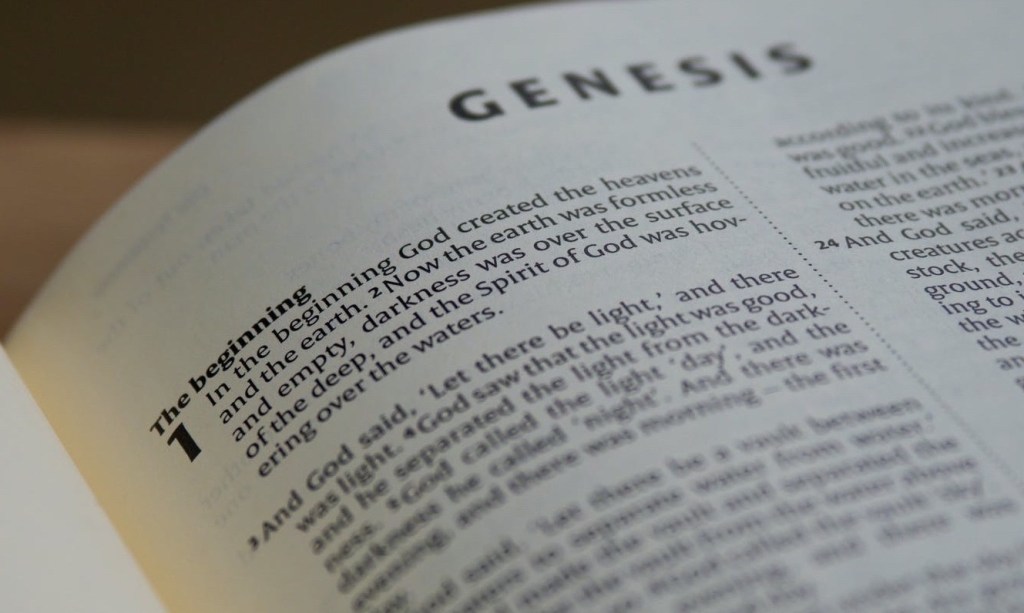
In verse 7, the word used for Law is Torah, which has the root meaning of instruction. Boice suggests our best equivalent would be “Scripture or the Word of God” (3). In verses 7-9, a succession of words combine to make clear one great truth.
“The law of the Lord is perfect, reviving the soul:” The Bible transforms the lives of those who bow before it. In the same way, as the sun is the source of all life on earth, the instruction of the LORD is all-sufficient for spiritual life. It powerfully converts and transforms the inner person.
“The testimony of the Lord is sure, making wise the simple:” As we have already noted when the Bible calls somebody a fool, it is not referring to intellectual capacity. Similarly, when the Bible calls a person wise, it is referring to a moral transformation, as Paul reminds Timothy, “and how from childhood you have been acquainted with the sacred writings, which can make you wise for salvation through faith in Christ Jesus.” (2 Tim 3:15). The Bible speaks directly and frankly to the human condition. He who is open to God’s instructions will become wise, whereas the one who thinks he is wiser than God will show himself to be a fool (see 1 Cor 1-19-21).
“The precepts of the LORD are right, rejoicing the heart:” The idea of the word right means straight instead of crooked. Only God can impart true happiness and contentment, so as we walk upright with wisdom for living, we will experience joy.
“The commandment of the Lord is pure, enlightening the eyes.” The Bible illuminates our understanding. The dimness and darkness of the soul give way to the light of the Word of God, and we begin to understand things that were shrouded in utter darkness before (see Ps 119:105).
“The fear of the Lord is clean, enduring forever:” Here, David describes how the Bible is devoid of flaws. It does not lead us onto corrupt paths, but eternal and lasting obedience will build our lives upon its unchanging truth.
“The rules of the Lord are true, and righteous altogether:” The Bible is the all-sufficient guide for truth and righteousness. As Paul again writes to Timothy, “All Scripture is breathed out by God and profitable for teaching, for reproof, for correction, and for training in righteousness, that the man of God may be complete, equipped for every good work.” (2 Tim 3:16-17). The Bible produces righteousness in those who obey it.
As David considers the revelation of the Word, he imparts to the reader his evaluation: “More to be desired are they than gold, even much fine gold; sweeter also than honey and drippings of the honeycomb.” (19:10). The gospel of Matthew records for us a parable in which Jesus likened the kingdom of God to treasure hidden in a field. When the treasure was found, the man who found it went and sold all that he had and bought the field (see Matt 13:44). The idea here is similar. David has found a treasure which far outweighs any other. This is the great truth that has been building in these verses. Are we equally convinced of its unsurpassed value?
Finally, in this section, we see two great benefits of heeding God’s instruction: “Moreover, by them is your servant warned; in keeping them there is great reward.” (19:11). The benefits of God’s instruction provide warnings to be heeded and promises to be trusted. This world is deceptive and alluring. Only by heeding the warnings and trusting the promises of the Bible will we be able to resist its deceptions. In heeding God’s instruction, there is a reward. As Boice says, “Saint Augustine once said sin is its own punishment. He could also have said that virtue is its own reward. Though the ungodly do not think so, the upright are actually blessed in their uprightness. Goodness is itself joyous. To be holy is to be content.” (4).
Responding to the Revelation
“Who can discern his errors? Declare me innocent from hidden faults. Keep back your servant also from presumptuous sins; let them not have dominion over me! Then I shall be blameless, and innocent of great transgression. Let the words of my mouth and the meditation of my heart be acceptable in your sight, O Lord, my rock and my redeemer.”
Psalm 19:12-14 ESV
As the Psalm reaches its climax, we might think it strange that David immediately begins by discussing his errors, faults and sins. However, as David considers himself to be in the light of the clarity of God’s instruction, he responds with humility. This is the right way to respond to God’s revelation. As Plumer writes, “Yet no good man, with any tolerable degree of knowledge of himself, can be ignorant that he comes far short of the absolute perfection required by God’s word.” (5). This is something that many today find problematic, for we live in an era of affirmation and gratification. Many in churches today listen to those who tell them that Christianity is a means to an end—a way to gain success and prosperity. Our sinfulness and accountability before a Holy God are minimised at best and, in some churches, not mentioned. Subsequently, a Christian saying we must bend the knee in repentance and faith is a strange message to some. However, whenever men and women are confronted with the holiness of God, humility and confession of sin are the only responses (see Is 6:5, Luke 5:8).
Allowing God’s Word to shine its light upon us can be painful. However, like David, we need to apply the Psalm to ourselves. As we allow God’s Word to penetrate our lives, our sinfulness will shine more brightly under its light. Our errors, hidden faults, and willful rebellion will become apparent so we might be brought to repentance and find forgiveness, as David does. How can our sins be dealt with? There is only one way, under the clarity of God’s Word. Where does God’s Word send us? The answer takes us from David the King to another King. As the light of God’s instruction leads us to understand our sin, so it leads us to the one who can deliver us from sin – Jesus, who by His perfect life met the demands of God’s law and by his death became a curse for us so that we could be redeemed (see Gal 3:13). Jesus is the rock on whom we can build our lives. God’s instruction does not tell us to “Get our act together, clean it all up and fix it, and hopefully, God will accept you.” That is not Christianity! God’s instruction will send you to the only one who can rescue you—God’s ultimate revelation – Jesus. The Bible turns us again and again back to the finished work of Christ. Are you trusting in Him?
Is He your rock and your redeemer?
Notes
- C.S Lewis – Reflections on the Psalms, 1958, cited in James Montgomery Boice – Psalms, An Expositional Commentary, Volume 1, Baker Books, 2005, p161
- https://www.ligonier.org/learn/articles/spirits-internal-witness
- James Montgomery Boice – Psalms, An Expositional Commentary, Volume 1, Baker Books, 2005, p170-171
- Ibid, p174
- W.S Plumer – Psalms, Banner of Truth Trust, 2016, p259
All scripture quotations are from the ESV.

 seekingthekingdom.blog
Love!! Thank you for sharing. A blessing to read.
LikeLiked by 1 person
Thank you 😊
LikeLiked by 1 person