“And to Adam he said, “Because you have listened to the voice of your wife and have eaten of the tree of which I commanded you, ‘You shall not eat of it,’ cursed is the ground because of you; in pain you shall eat of it all the days of your life; thorns and thistles it shall bring forth for you; and you shall eat the plants of the field. By the sweat of your face you shall eat bread, till you return to the ground, for out of it you were taken; for you are dust, and to dust you shall return.””
Genesis 3:17-19 ESV
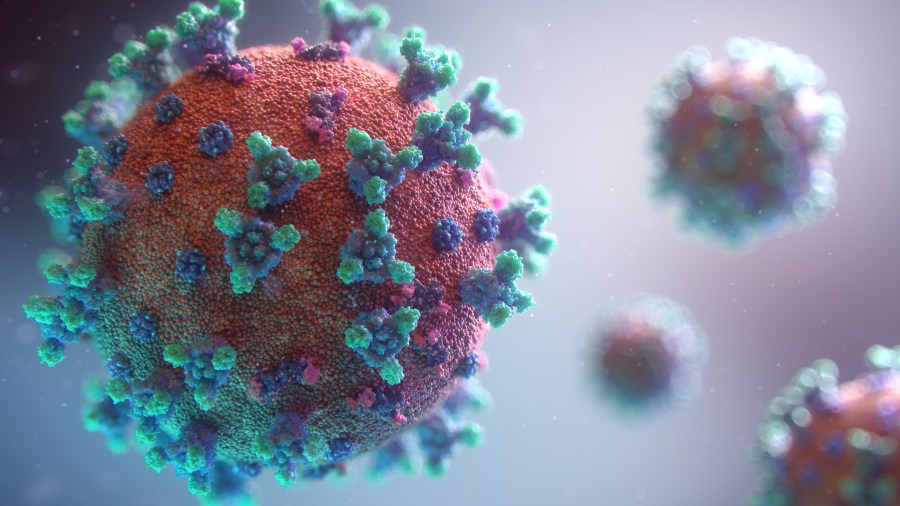
In late December 2019, the World Health Organisation (WHO) became aware of a new Coronavirus, subsequently designated SARS-CoV-2, after reports of a cluster of cases in Wuhan, China. The disease quickly spread worldwide, with the first cases being identified in the United Kingdom in late January 2020.
To suppress the virus, countries introduced harsh countermeasures such as lockdowns, travel bans, social distancing, mask-wearing, and quarantines. On March 11, 2020, the WHO declared the new Coronavirus a pandemic. At the time of writing, deaths worldwide are approaching three million people.
A common question I have heard among Christians is about Coronavirus and God’s judgment. This is the first of two articles looking at Christians’ responses to Coronavirus. This article will explore the question, ‘Is Coronavirus God’s judgment?’ and the second article will look at, ‘What is God teaching us?’
Is Coronavirus God’s judgment?
Yes, but that answer needs to be placed within the context of a correct doctrinal understanding.
Jumping to Conclusions
On the 29th of February 2020, a friend sent me a WhatsApp message consisting of a prayer recording. Just after the start of the prayer, the person praying said,
‘Forgive China for whatever sins they may have committed to deserve this fatal virus.’
Two instances in the New Testament warn against this conclusion (see John 9:1-3, Luke 13:1-5). In John’s account, the disciples immediately link a man’s blindness to his or his parent’s sin. In Luke’s account, Jesus warns his listeners against concluding that those who died, first in a massacre and second in a tragic accident, were worse sinners than anybody else.
It was a commonly held belief amongst the Jews that every temporal misfortune was God’s punishment for a specific sin. The Book of Job is an example of this line of thought. Jesus dismissed this as an improper conclusion to make (see John 9:3). This is not to say, however, that trials are never God’s chastisement for specific sins, for example, the chaos that engulfed David after he sinned with Bathsheba (see 2 Sam 11-21), or in the discipline of believers (see Hew 12:10-11).
Neither is it to deny sowing and reaping. There are decisions we make which have obvious consequences. If we smoke, we increase our chances of developing 15 different types of cancer. If we drink too much alcohol, we increase our chances of developing cirrhosis of the liver and so on. However, we all know people who develop diseases outside of this context.
That is why all of our misfortune in life must ultimately be viewed and linked back to Genesis chapter 3 and the doctrine of original sin. That is why judging others’ sufferings as immediate punishment from God for a specific sin is unwise. To do so is to treat your sin lightly. Jesus warns us against such hypocrisy (see Matt 7:1-5). What makes the United Kingdom, or any other country, holier than China? Coronavirus is now a worldwide pandemic, proving that it is not China-specific.
The global Curse
Genesis chapter 3 accounts for the fall of man and provides us with the doctrine of original sin. The doctrine of original sin refers to the result of the first sin – the corruption of humanity and the fallen condition to which every man and woman is now born. Man disobeyed God, and the curse followed (see Gen 3:1-19). Humanity was created to have dominion over the earth and to care for it (see Gen 1:28), but after the curse, the world became resistant to man’s dominion. Creation itself now works against man (see Gen 3:18). This is God’s judgment on sin, which we all face because we have all sinned (see Rom 5:12-21).
It is in this context that we can link suffering to sin. The Westminster Confession of Faith chapter 6, paragraphs 2-4, puts it like this,
‘By this sin they fell from their original righteousness and communion with God, and so became dead in sin, and wholly defiled in all the parts and faculties of soul and body. They being the root of all mankind, the guilt of this sin was imputed, and the same death in sin, and corrupted nature, conveyed to all their posterity descending from them, by ordinary generation. From this original corruption, whereby we are utterly indisposed, disabled, and made opposite to all good, and wholly inclined to all evil, do proceed all actual transgressions.’
The effects of the curse are seen in many ways. Man is now born to trouble (see Job 5:7). The ground man was designed to cultivate eventually swallows him in death, and the earth is frustrated and longs for restoration (see Rom 8:20-22). The world now yields dangerous animals, severe weather patterns, poisons and diseases, which kill millions every year.
There is a sense that man is now his own worst enemy (see Ps 51:5). Man murders one another (see James 4:1-2). Man is killed and injured by apparent random events and accidents. Not only does the world work against man, but man works against himself. Man cannot find inner peace. The World has seen an explosion in mental health and behavioural problems. A man now dies by suicide on average in the world every 40 seconds (1). And eventually, each one of us will die (see Gen 3:19). Life in this world is complex, frustrating and perplexing (see Eccl 1:1). As one writer put it,
‘The moment we enter into this life we are already in the fight. The battle of morality. The battle of purity. The battle of chastity. The battle of honesty. And what a fight it is! The current is dragging us down. How difficult it is to fight against it and to battle upstream. This is a verification of God’s judgment…..There is the very struggle for existence – the toil of earning one’s livelihood, getting one’s daily bread, the hardness, the thorns and the thistles, the competition and the troubles. Why is it that thorns and thistles grow so abundantly? Why is it so difficult to get a crop of wheat or corn out of the ground? Why this endless fighting, with everything against us? All we get we have to work for with the very sweat of our brow. Again, this is just part of God’s judgment on sin. And men and women have been trying to deal with it and to cope with it ever since, but they cannot. They would like to get back to that paradise, but they have been driven out…..The whole story of civilisation, in a sense, is a story of futility, a history of failure…..We ever seem to be advancing. We are on the point of getting there. But we just go around the other side of the circle, and we are back where we were. Civilisation goes round and round in cycles. There is no forward advance. There is no end. There is no reaching the ultimate objective. Life is simply a futile procedure. Round and round we go. We rise. We succeed. We fail. We fall. Down they go – dynasties, empires, individuals. That is always true…..Man will never get back there by his own efforts; he is incapable of it…..’ (2)
We must understand disease and death within the context of man’s fall, original sin, and God’s judgment. Coronavirus manifests God’s judgment on sin in the context of the curse of Genesis chapter 3. But as we shall see, behind these judgments is God’s love.
The Final Judgement
““Yet even now,” declares the Lord, “return to me with all your heart, with fasting, with weeping, and with mourning; and rend your hearts and not your garments.” Return to the Lord your God, for he is gracious and merciful, slow to anger, and abounding in steadfast love; and he relents over disaster. Who knows whether he will not turn and relent, and leave a blessing behind him, a grain offering and a drink offering for the Lord your God?”
Joel 2:12-14 ESV
The book of Joel in the Old Testament reveals to us God’s intention in calamity. Judah had been devastated by a plague of locusts (see Joel 1:4). The locusts were an instrument of divine judgment to elicit a response from a people who had turned their backs on God. Joel pulls back the divine curtain and reveals God’s intention – a call to repentance (Joel 1-2). This call to repentance continues today (see 1 Tim 2:3-4, 2 Pet 3:9, Acts 3:19, Matt 4:17, Mark 16:16, Luke 13:1-5).
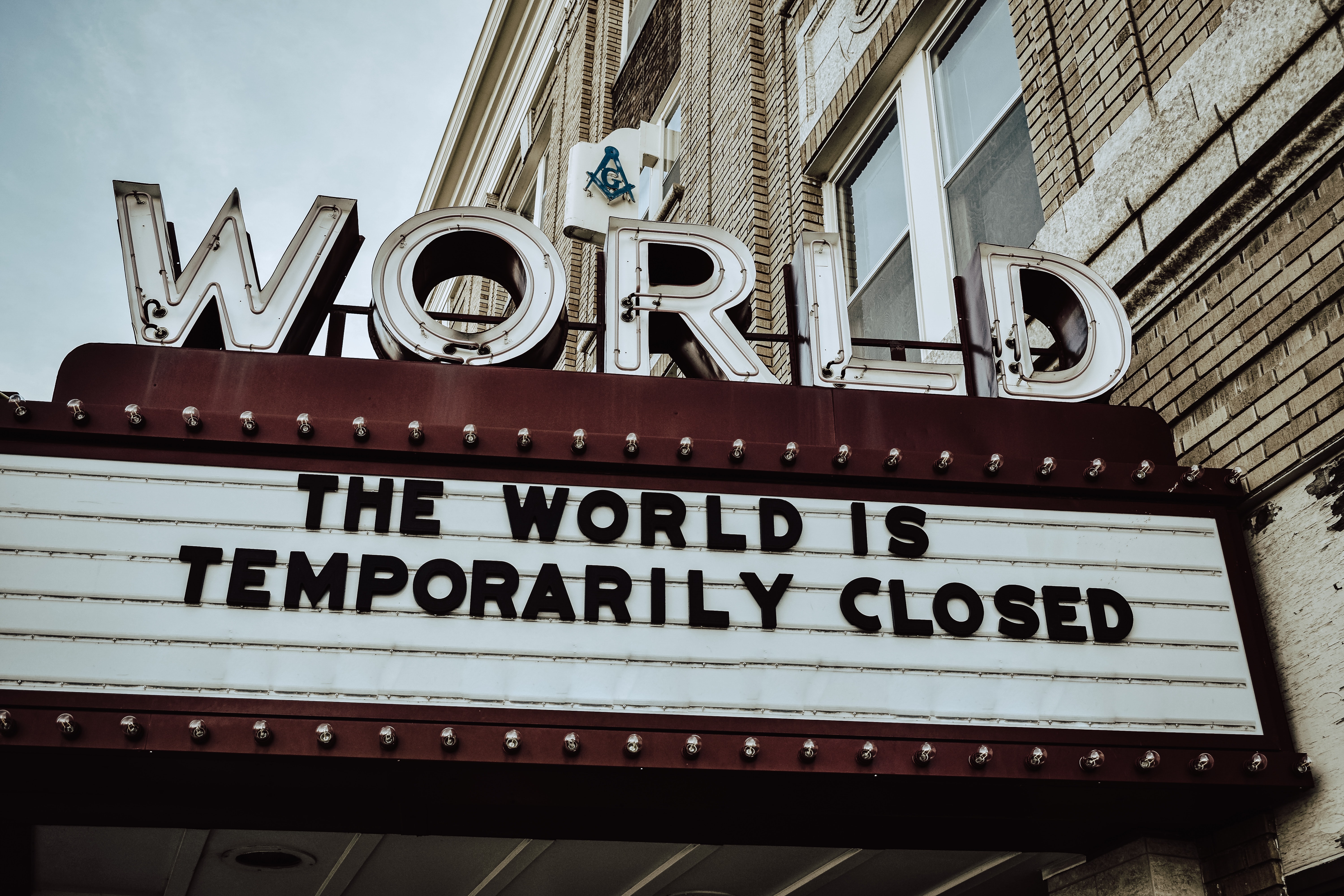
The world might only be temporarily closed, but the Bible says there is a day coming when God will close this world permanently, and finally (see 2 Pet 3:10-13, Rev 21:1-5, Is 65:17). Coronavirus is a temporal judgment, a warning, a discipline, a signpost, pointing us to the reality of the final judgment (see 2 Cor 5:10, Rev 20:11-21:8). This is how God’s love is seen in a pandemic. God uses calamity to wake people from disobedience and spiritual sleep and graciously calls them to repent before it is too late (see Joel 2:12-14, 2 Pet 3:9).
Good News
“For as by a man came death, by a man has come also the resurrection of the dead. For as in Adam all die, so also in Christ shall all be made alive.”
1 Corinthians 15:21-22 ESV
Good news is even more glorious when set in the context of bad news. The gospel is good news because it is the story of how God has sent His Son Jesus into this world to undo what Adam did. We are told of this in what theologians call the protoevangelion or ‘the first gospel’ (see Gen 3:15).
Amid the disaster of the fall of man and the curse of this world, God promises to send a man who will rescue His people from the curse. In Adam, we die, but in Christ, we live (see Rom 5:12-21, 1 Cor 15:21-22). This is why Jesus is often called ‘the last or second Adam’ (see 1 Cor 15:45-49).
The Son of God came into this cursed world, and, in His sovereign power, took upon Himself the judgment of God that we deserve because of our sin by dying on a cross as a perfect sacrifice (see Is 53, Gal 1:4, 3:13). Through Jesus, we are made spiritually alive and reconciled to God (Rom 5:10).
Like in Joel’s time, God is calling this world to repentance and faith in Him. Coronavirus is not a random event. As we look at it through the eyes of faith, we see it simultaneously as a judgment on sin and a tool in the hands of a loving God to prompt our repentance and faith in Jesus.
Amid calamity, that is good news indeed.
Notes
- https://www.who.int/teams/mental-health-and-substance-use/suicide-data
- Martyn Lloyd Jones, The Gospel In Genesis – From Fig Leaves to Faith, Crossway, 2009, p74-76
All scripture quotations are from the ESV

 seekingthekingdom.blog
Another great post of yours Rob. Strong message on the consequences after the fall. Thank you. It’s always a pleasure to read your posts. May the Lord keep on guiding you in writing many more. 🙏
LikeLiked by 1 person
Thank you for the encouragement 😊
LikeLike