“I love a good story. However, I have found that most stories, especially more recent ones, are not that good. Truly good stories are typically very old. They have stood the test of time. They not only communicate to our intellects and connect our hearts to their characters, but they also reach the very depth of our souls. Good stories make us laugh and cry. They challenge us and comfort us. They do not leave us unchanged.”
Buck Parsons
Jesus was a master storyteller.
A parable is a simple picture story conveying spiritual lessons (1). Through it, the mystery of God’s kingdom is revealed. Like any good illustration, a connection is made with the listener, interest is naturally aroused, and the story is fixed in memory. To convey something unfamiliar, the best way to do it is to start with the familiar, from the known to the unknown.
Jesus grew up in the same culture as his listeners and was familiar with aspects of their everyday lives. So, when Jesus talked about a farmer sowing a seed, a wedding, or a lost sheep, his listeners understood what he was saying. Jesus took these everyday routine things of life and transformed them into messages concerning the kingdom of God.
Due to their simplicity, the ordinary person would be able to discover the meanings of the parables. However, a parable would also conceal its meaning for those who opposed Jesus and hardened their hearts. Contrary to what many might think, Jesus did not teach using parables to make understanding the Kingdom of God easier, but as they were taught, a kind of filtering system of hearts was in operation (see Matt 11:25-26, 13:10-17).
For those who had ears to hear a parable, it would illustrate and clarify the truth, but it had the opposite effect on those who rejected Jesus. In one sense, it was a judgment on those who scorned His teaching. As we come to study the parables of Jesus, the question is, what about you? Are you in rejection or submission to Jesus? There is no neutrality when it comes to Jesus. There is no ‘sitting on the fence.’ The Bible does not allow for that. The Pharisees, whom Jesus was talking to, were not neutral. They got the point but responded by rejecting Him (see Matt 11:25-26, 21:45-46).
The Pharisees did not have ears to hear. When we hear a story we like, we like to repeat it. When you hear the teaching of Jesus, do you delight in it, or does it confound you? Do you love hearing what the bible has to say or walk away saying, ‘This is not for me?’ If the latter is true, then perhaps it’s because God has not yet given you eyes to see, ears to hear, or a heart to perceive.
We need to pray that our hearts will be good soil so that the Word of God will bear fruit (see Matt 13:1-23). When applied to our hearts by the Holy Spirit, the parables are designed to be life-changing, so pray for the Holy Spirit to illuminate our minds, hearts, and wills to receive the gospel of Jesus Christ (see Matt 13:16).
An Invitation Rejected
“And again Jesus spoke to them in parables, saying, “The kingdom of heaven may be compared to a king who gave a wedding feast for his son, and sent his servants to call those who were invited to the wedding feast, but they would not come. Again he sent other servants, saying, ‘Tell those who are invited, “See, I have prepared my dinner, my oxen and my fat calves have been slaughtered, and everything is ready. Come to the wedding feast.”’ But they paid no attention and went off, one to his farm, another to his business, while the rest seized his servants, treated them shamefully, and killed them. The king was angry, and he sent his troops and destroyed those murderers and burned their city.”
Matthew 22:1-7 ESV
“The marriage union so powerfully expresses the union between Christ and his church that it is the capstone of the whole biblical revelation. Consequently, when Jesus tells a parable about the wedding of the king’s son he is dealing with the very pinnacle of history, the main purpose of all creation. So if we hear when the king sends out his servants to invite people to the wedding that the invitation is refused, we are dealing with a rejection of the whole purpose of God.”
Mark E Ross
How do I enter the Kingdom of God?
Have you ever asked yourself that question? It is the most significant question a person can ask. The parable begins with these words, ‘The Kingdom of heaven may be compared to..’ or ‘The Kingdom of heaven is like..’ Throughout Jesus’ teaching ministry, many of His parables focused on the urgent reality of entering the kingdom of God, and the parable of the wedding feast is no exception.
Chapters 21-23 of Matthew focuses on the rejection of Jesus by the religious leaders. We are now reaching a climax to the story. Jesus would soon be crucified. This was the third parable with a similar theme: the theme of rejection (21:28-46). This parable concerns a king who gave his son a wedding feast and sent out rejected invitations (22:3, Luke 14:16-24). The imagery here is essential because, in the Bible, the covenant between God and His people is compared to marriage (see Ps 45, Ezek 16, Hos 1-3, Eph 5:22-33, Rev 19:6-10, 21:2).
In what Hendrikson calls, ‘The marvellous long-suffering of the King’ (2). God, in his patience, sends out another invitation, which is again rejected (22:3-6). This rejection is seen in two ways: firstly, in indifference and, secondly, in hostility (22:5-6). Luke’s gospel tells us that they all began to make excuses (see Luke 14:18-20). It was not that they could not come; they would not come. They were not willing (23:37).
The same is true with men and women today. Everybody has an excuse. How tragic to be offered the blessings of God but to refuse them in favour of the mundane things of this world. When confronted with the gospel of Jesus Christ, do you make excuses? Are you indifferent, even hostile to the message? Are you unwilling to listen to Jesus? If that is true of you, it is vital to ask why. The King is long-suffering (see 2 Peter 3:9). But be warned, for those indifferent or hostile to the gospel, there is a limit to God’s mercy (22:7).
An Invitation Accepted
“Then he said to his servants, ‘The wedding feast is ready, but those invited were not worthy. Go therefore to the main roads and invite to the wedding feast as many as you find.’ And those servants went out into the roads and gathered all whom they found, both bad and good. So the wedding hall was filled with guests.”
Matthew 22:8-10 ESV
“So the servant came and reported these things to his master. Then the master of the house became angry and said to his servant, ‘Go out quickly to the streets and lanes of the city, and bring in the poor and crippled and blind and lame.’”
Luke 14:21 ESV
It is inconceivable that God would be defeated or disappointed. The death of Jesus could not be in vain. His work could not be ineffective. There will be a wedding feast for His Son, and the wedding hall will be filled with guests. If the former have proved themselves unworthy, then others would be invited. So, the King sends out His servants with the instruction to bring in as many as possible. The bad and the good. The poor, disabled, blind and lame (21:43, 22:10, Luke 14:21).
This parable was an indictment of the nation of Israel. God had entrusted the Kingdom to Israel, but the priests, Pharisees and scribes had rejected the King, and so the Kingdom would be taken away from them and given to others. Those who thought they were wiser than God would be confounded, but those with child-like faith. Those who recognised themselves as being spiritually impoverished, disabled, blind and lame would be thankful for the invitation (see Matt 21:43, 1 Cor 1:27-29). All are now invited to the wedding feast (see Matt 28:19, Acts 1:8).
It would make sense for the parable to end here, but instead, like every good story, it takes a surprising and disturbing twist.
A Condition of Entry
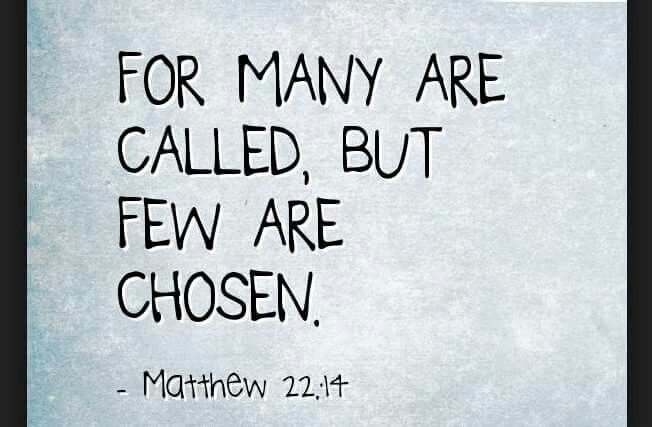
““But when the king came in to look at the guests, he saw there a man who had no wedding garment. And he said to him, ‘Friend, how did you get in here without a wedding garment?’ And he was speechless. Then the king said to the attendants, ‘Bind him hand and foot and cast him into the outer darkness. In that place there will be weeping and gnashing of teeth.’ For many are called, but few are chosen.””
Matthew 22:11-14 ESV
“When He shall come with trumpet sound, O may I then in Him be found! Clothed in His righteousness alone, faultless to stand before the throne.”
Edward Mote
On my last visit to the British Museum, I had to enter a large marquee and submit to a bag search before I was allowed in. Without it, I could not enter. It was a condition of entry. It’s widespread when visiting large establishments or events to have similar conditions of entry. Did you know that Heaven has a condition of entry? The condition of entry to Heaven is righteousness. Our hearts must be prepared to meet the King.
It is important to remember that a parable is a symbolic story conveying the reality of the Kingdom of Heaven. Jesus is not telling his listeners that God is offended by clothes! It is important to note the concluding point of the parable (22:14). The man represented here has been called but not chosen. Why? because he is not wearing the wedding garment. The obvious question is, what does the wedding garment represent?
Jesus is making it clear that there is a condition of entry that every person must meet. All are invited to the wedding feast, but a person cannot ‘gatecrash’ the wedding feast, which symbolises Heaven, without God’s required righteousness. The wedding garment represents righteousness. To enter heaven, we must be holy as God is holy. Perfect as God is perfect. Righteous as God is righteous (see 1 Peter 1:15-16, Matt 5:48, Heb 12:14). A person who does not possess this righteousness cannot escape an all-seeing God (22:11).
The problem is, if we are honest with ourselves, we know we are not righteous. On the contrary, the bible gives a devastating diagnosis of the human condition. Like the Pharisees, we have all rejected the King. The Bible declares that by nature, we are dead in our sins (see Eph 2:1, Rom 3:23, John 3:19). Our righteousness is filthy in the sight of God (see Is 64:6).
If you do not believe this, look into the mirror of God’s law and see what kind of reflection comes back. In theological terms, righteousness must be imputed and imparted. Not only must our sins be forgiven and righteousness given to us, but we must also walk in the newness of life (Rom 6:4). We must be justified and sanctified. Our hearts must be changed. We must become new (see 2 Cor 5:17).
We cannot come to God based on our character and good works. Neither can we come as a religious moralist or a philosophy follower. No, it must be based on the person and work of God’s appointed King. Jesus came to save His people from their sins (see Matt 1:21, 20;28, Luke 19:10).
The Bible declares humanity to be sinners and rebels by nature. We have broken God’s law and are condemned. Everybody is invited to the wedding, but only by repentance and faith in Jesus can we be covered with the robe of His righteousness and made faultless to stand before Him (see Is 61:10, 2 Cor 5:21).
The parable ends with a sober warning (22:12-14). This is a picture of Judgement (see Rev 20:11-15). With no robe of righteousness, the gatecrasher is immediately spotted and challenged. It is important to note that when challenged, he is speechless (22:12), Representing terror and guilt.
He was now accountable to the King for why he had no wedding garment and had no answer. There were no excuses, no wisecracks, no justification of his works. All that was left was the realisation that he was naked in his sin, without hope. His heart was utterly unprepared to meet the King (see Rom 3:19),
This is a sober warning to all who think they can stand before God and justify themselves. Contrary to our world now, there will be no such thing as bravado on that day. When everything you have thought and done, when the motives of your heart are revealed, what excuses will you have?
All that remains will be the realization of the judgment your sin deserves. That is the warning Jesus gives. The man in the parable is rejected and ejected (22:13). In stark contrast to the joy of a wedding feast, outer darkness and weeping are a picture of eternal judgment in hell (see Rev 20:15).
How do I enter the kingdom of God? That was the question posed at the beginning. The answer is to meet the entry conditions. Our hearts must be prepared to meet the King. We are all called to the wedding, but there is a big difference between being called and being chosen (22:14). Many people hear the gospel message, but few respond. The Bible tells us plainly that we cannot change our hearts. We need the Holy Spirit to make the unwilling willing.
In the end, salvation is not a human accomplishment but a gift of God’s grace (see Eph 1:4). The question remains – are you chosen? Have you come to Jesus in repentance and faith? Are you trusting in the perfect sacrifice of Jesus on the cross? Are you trusting in His righteousness alone? Do you know the forgiveness of sins and the ongoing work of conformity to Jesus?
Are you wearing the wedding garment? For many are called, but few are chosen.
Notes
- For an in-depth study on the Parables see – John MacArthur, Parables, The Mystery Of God’s Kingdom Revealed Through The Stories Jesus Told, Thomas Nelson Books, 2015
- William Hendriksen, New Testament Commentary – The Gospel of Matthew, Banner of Truth, 1989, p793
All scripture quotations are from the ESV

 seekingthekingdom.blog